
Stop Doing More and Just ALIGN
How to design from your values instead of drowning in your tasks.

A few months ago, I sat at my desk staring at a Google Doc that had turned into a digital graveyard of half-finished lessons, notes, and “next week I’ll fix this” ideas.
Probably like fifty-three tabs open.
Ten unread emails.
And one tired teacher behind the screen… me.
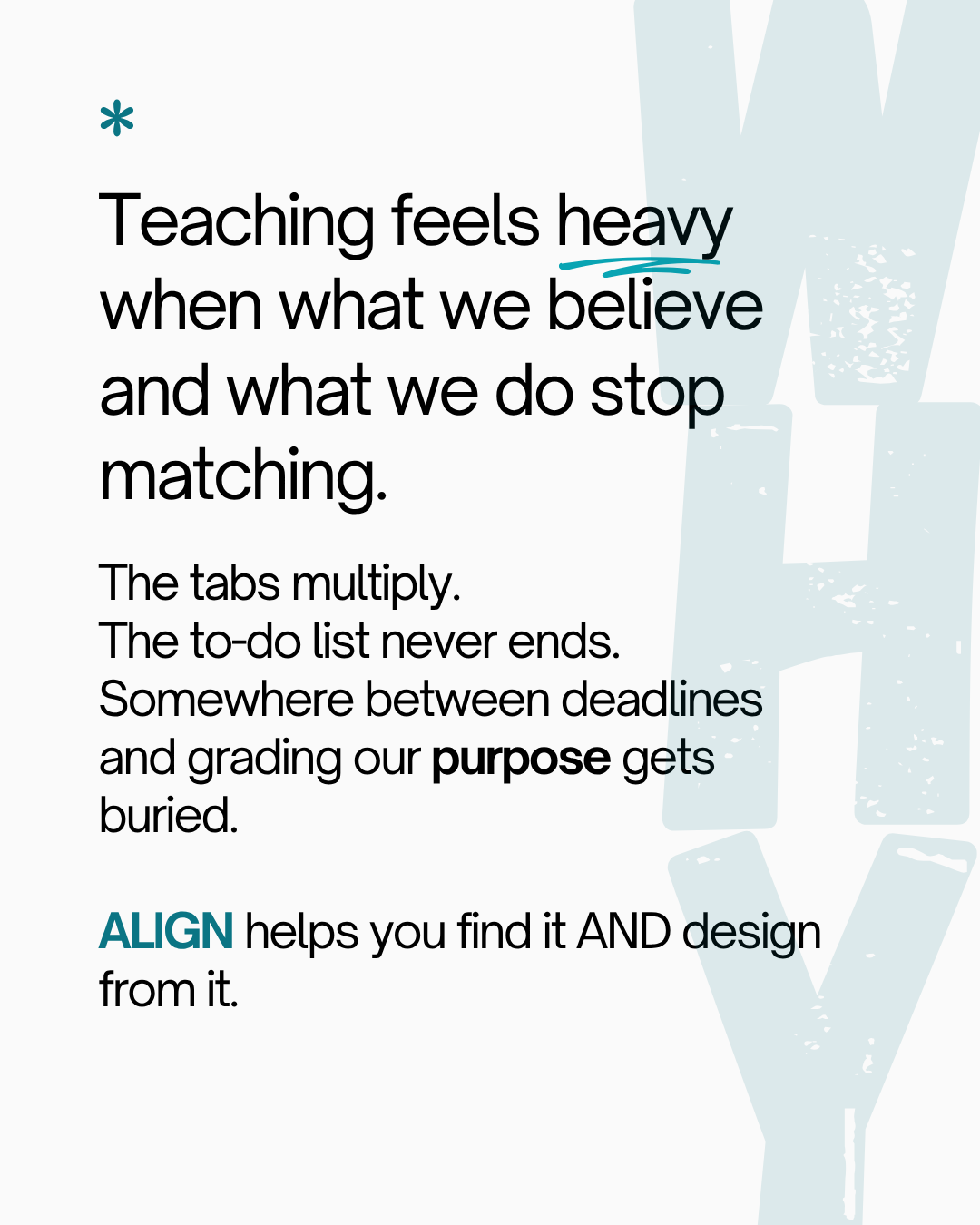
I wasn’t burned out exactly… just buried.
Buried under the weight of more.
More initiatives.
More grading.
More new tools that promised to make teaching easier, but somehow just gave me another password to forget.
And in all that noise, I realized I couldn’t even name what I believed about learning anymore.
The Question That Changed Everything
During my nightly ritual of reflecting with AI after getting the kids to sleep I opened ChatGPT and typed:
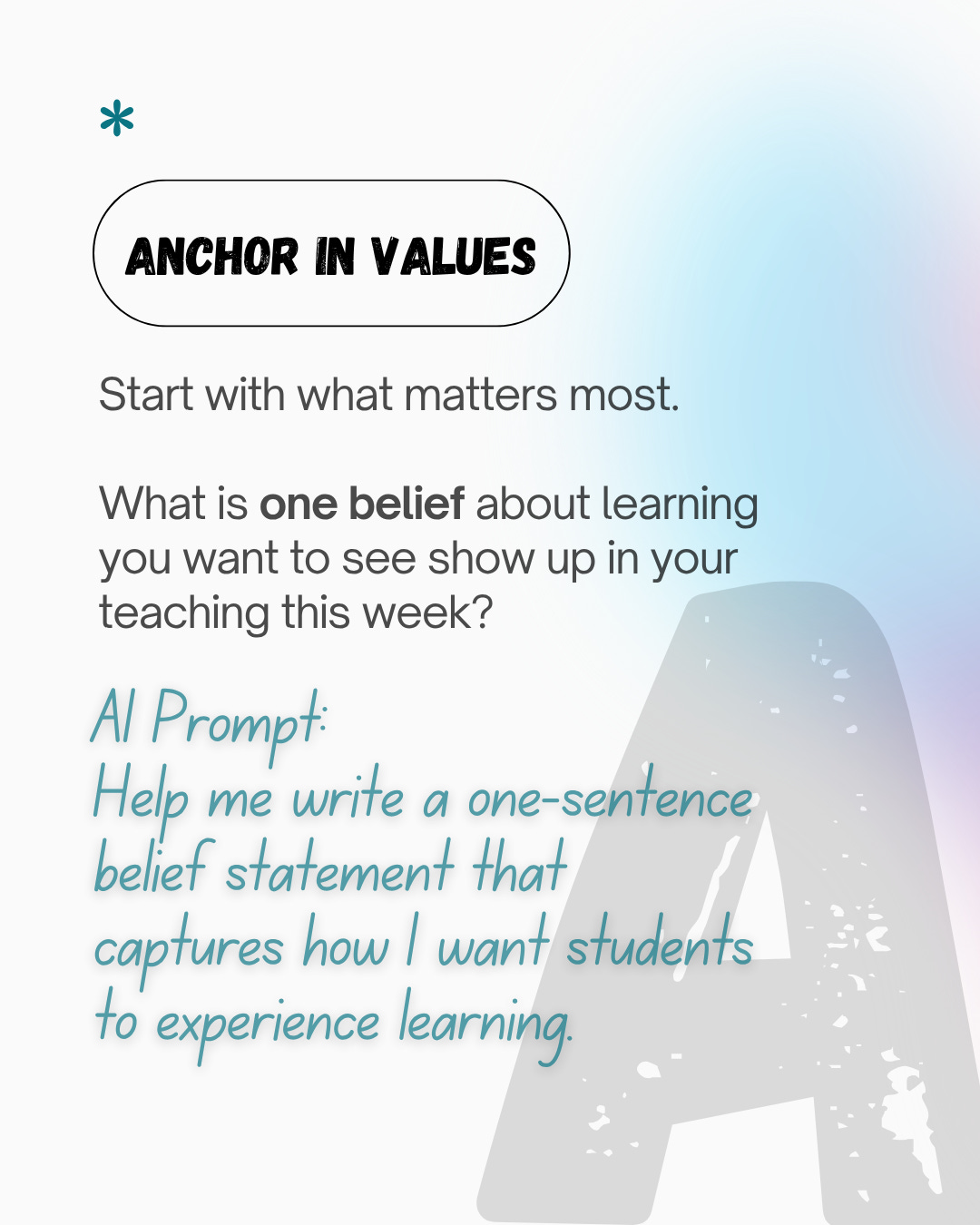
“Help me write a one-sentence belief statement that captures how I want my students to experience learning.”
The response stopped me cold:
“You believe that every student deserves to feel seen, challenged, and capable—and that learning should help them discover who they are.”
I sat there rereading that line.
Because it wasn’t just about teaching skills anymore. It was about helping students see themselves as thinkers, creators, and contributors.
And that’s what I’d lost track of somewhere between the emails, the data cycles, and the constant pressure to perform.
That one AI-generated sentence didn’t tell me who I was as a teacher. It reminded me.
It named what I already knew but hadn’t said out loud in too long.
That was the night ALIGN was born.
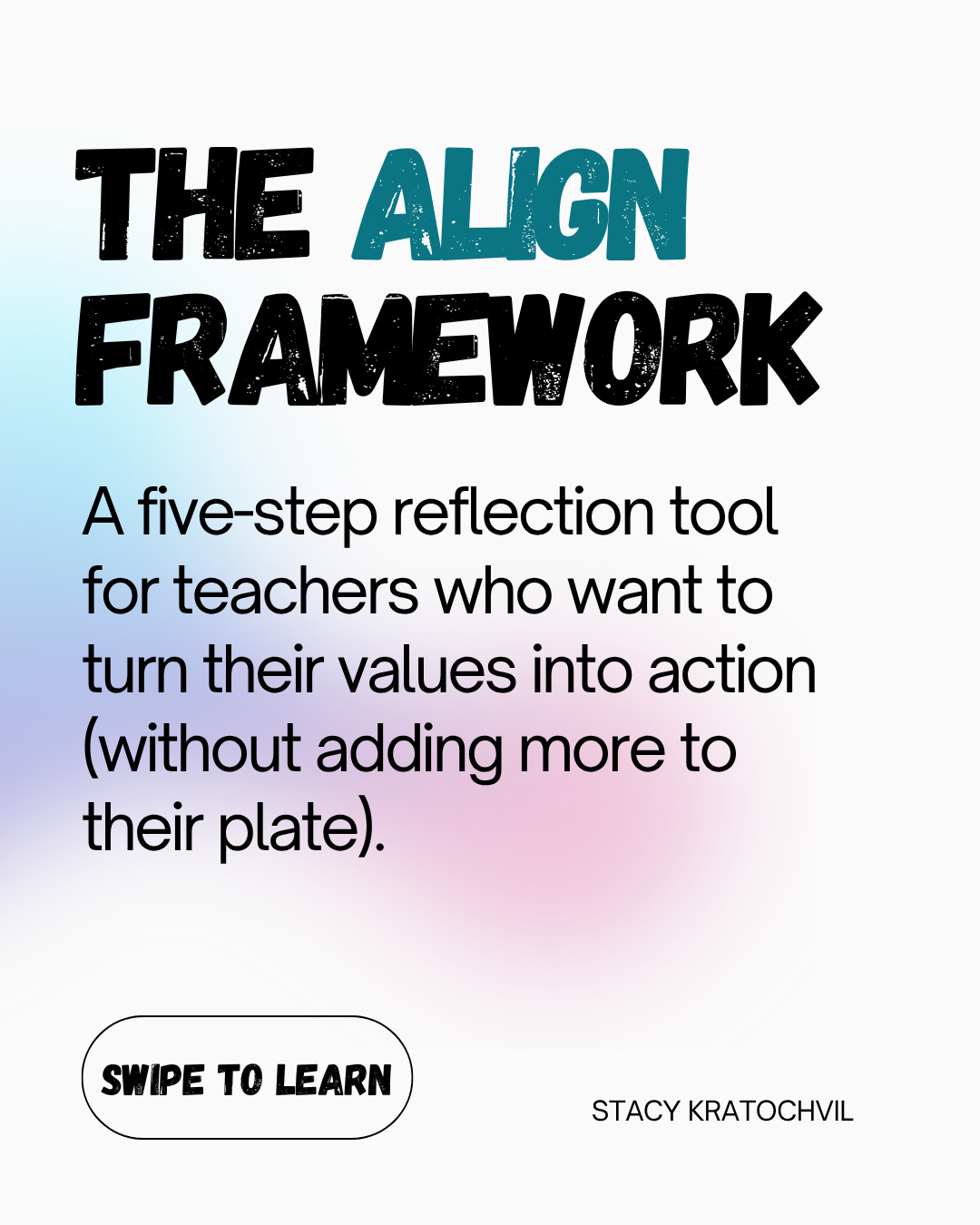
What ALIGN Really Is
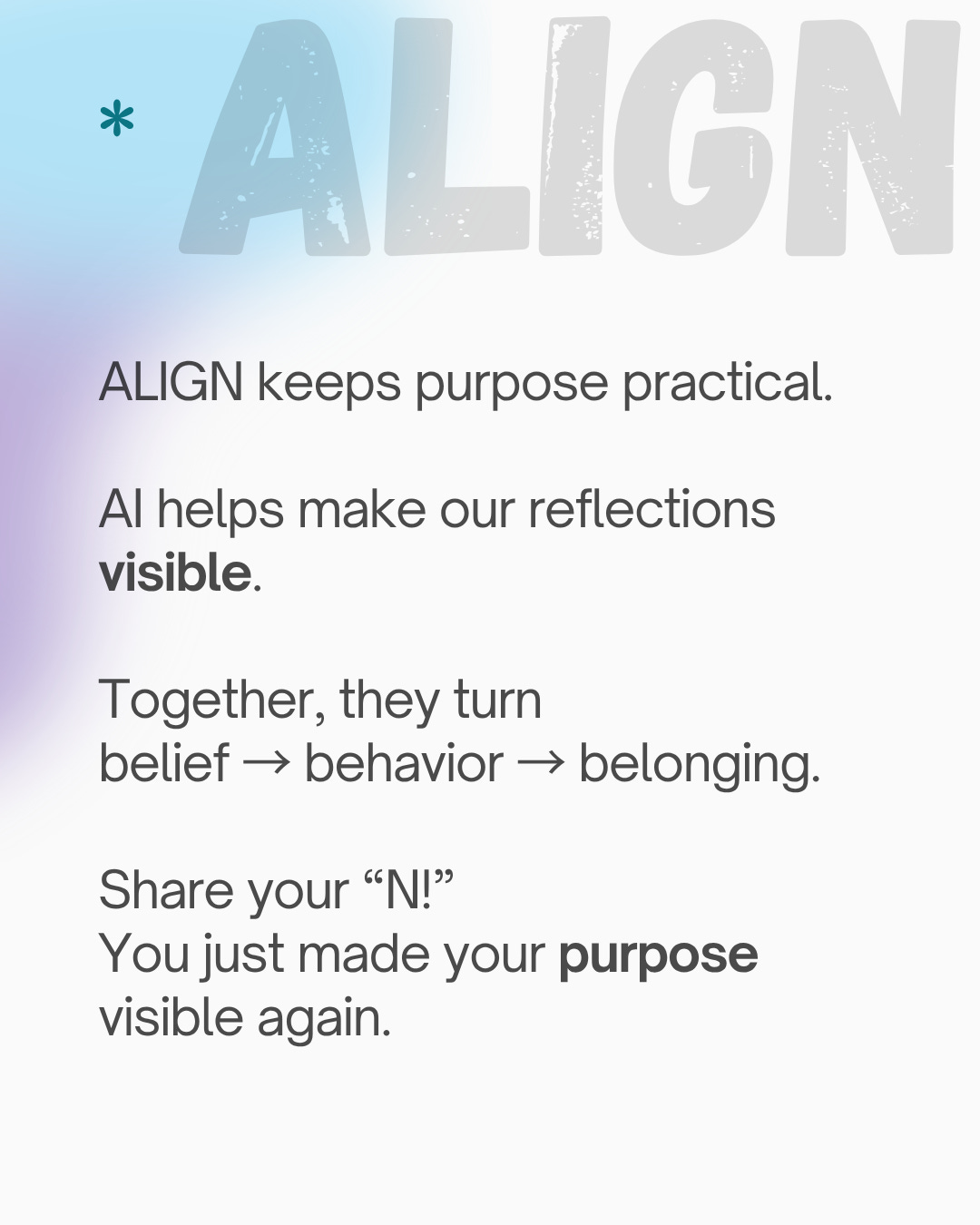
It’s not a new system or a five-step magic cure.
It’s just the way I found my way back to purpose. One small, doable reflection at a time.
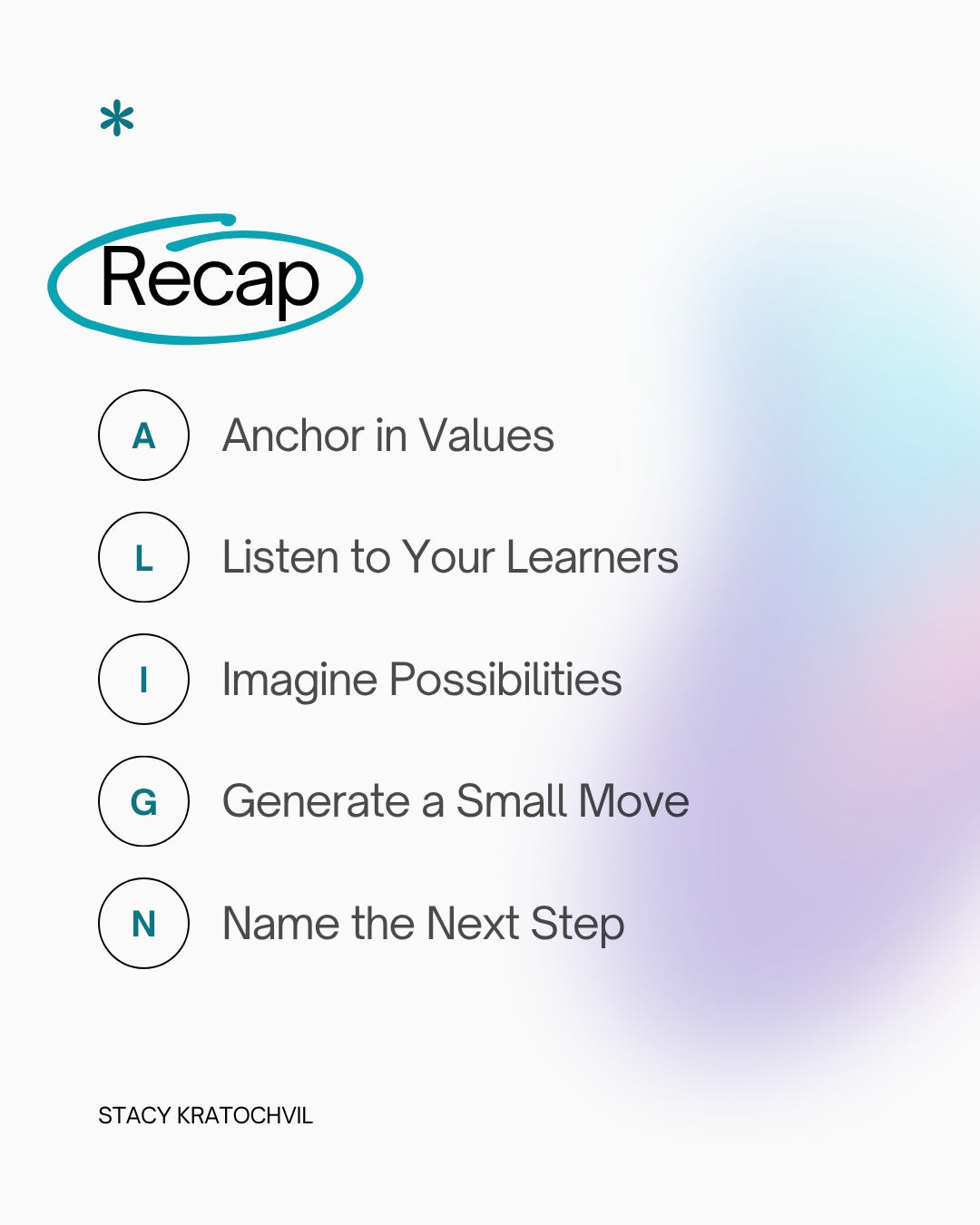
A — Anchor: Start with what you believe.
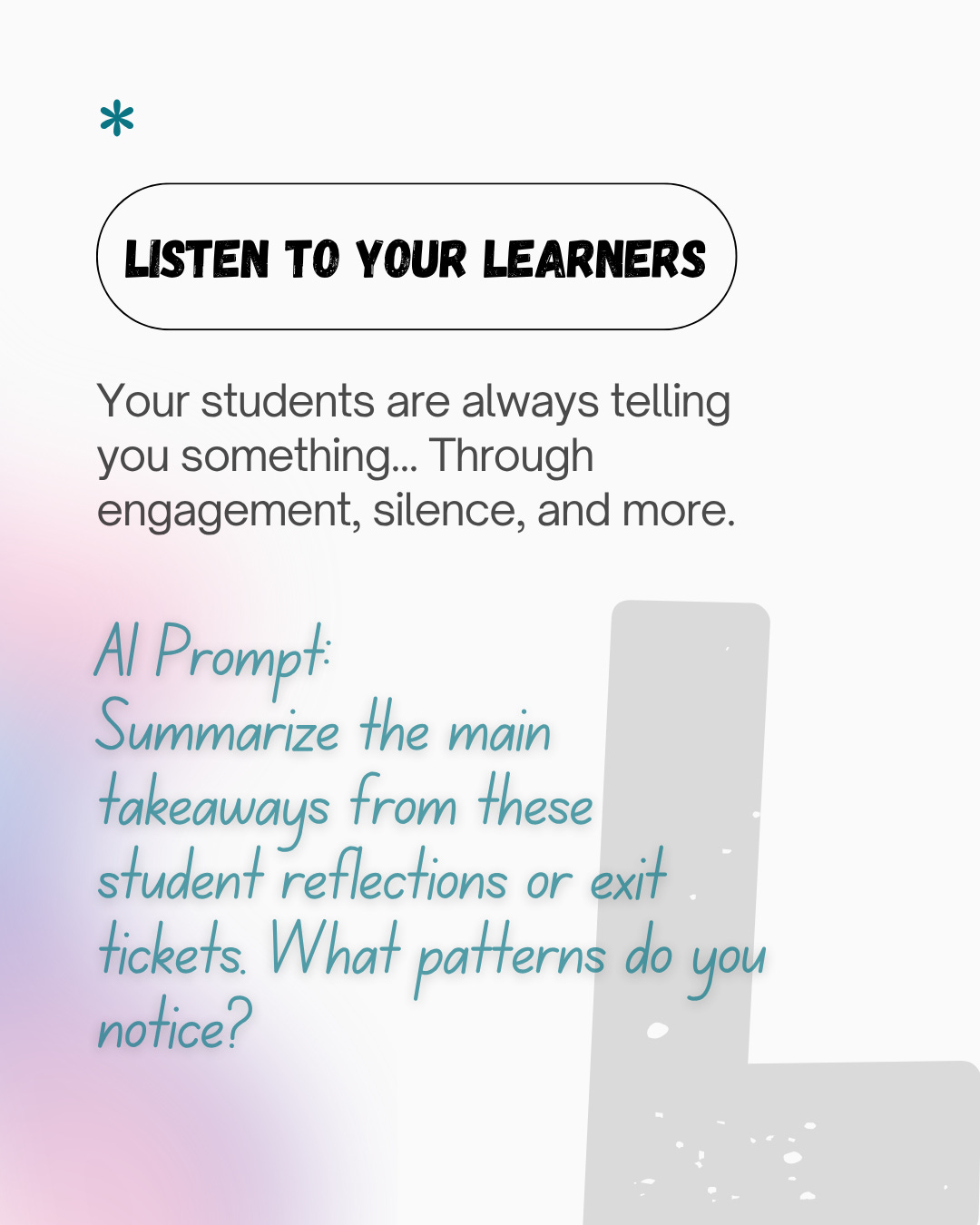
L — Listen: Notice what your students are showing you.
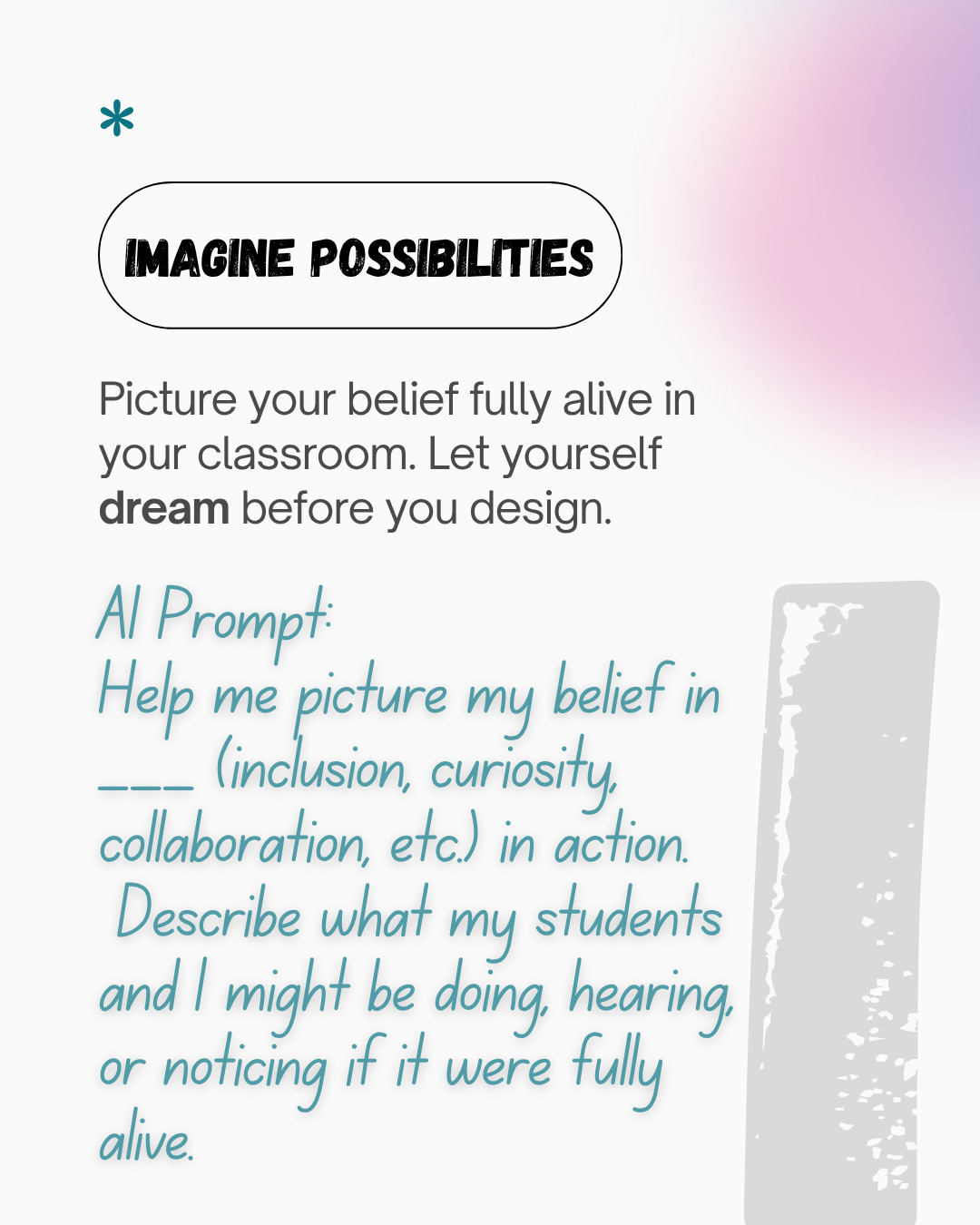
I — Imagine: Picture what it would look like if that belief came alive.
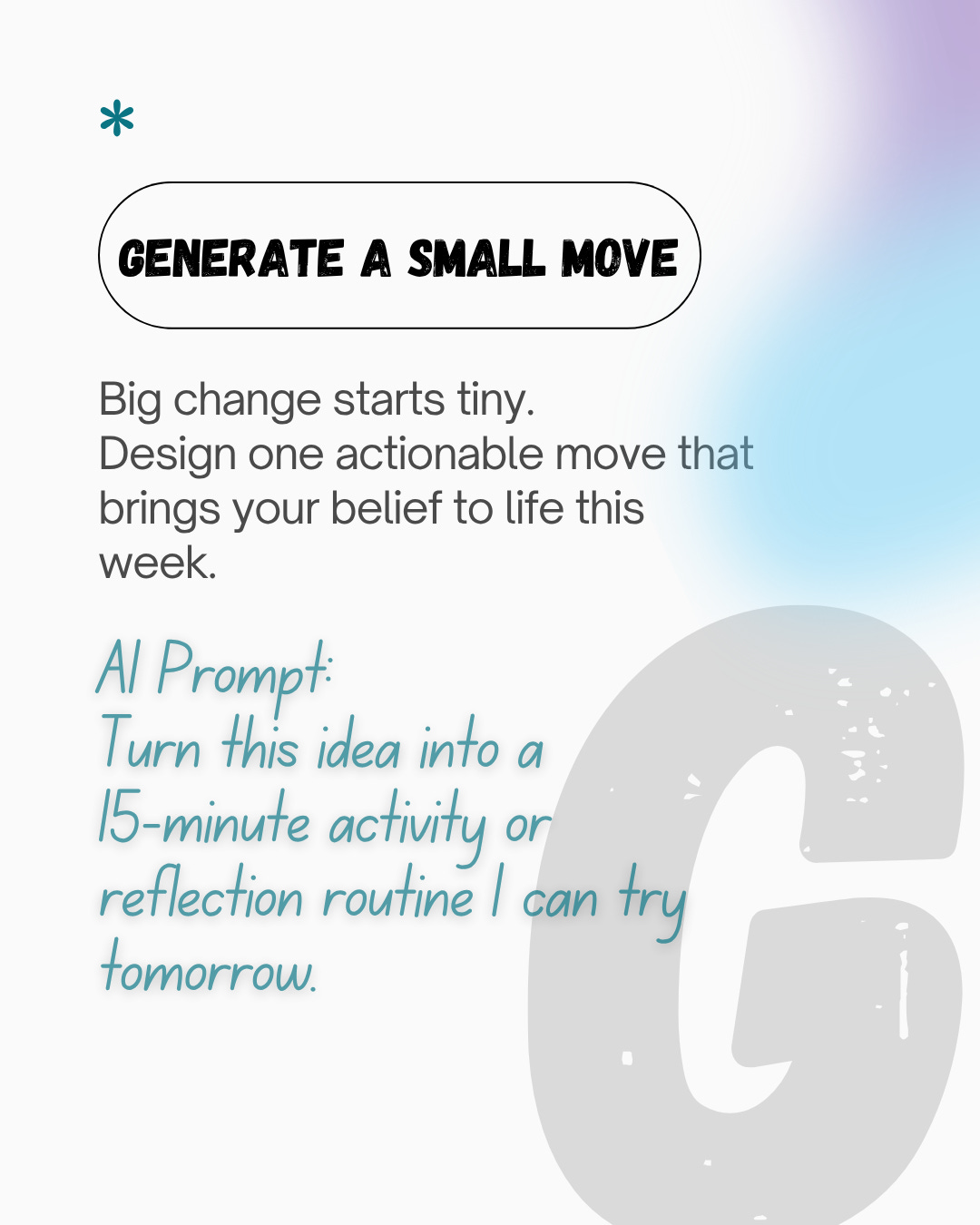
G — Generate: Create one small action to try.
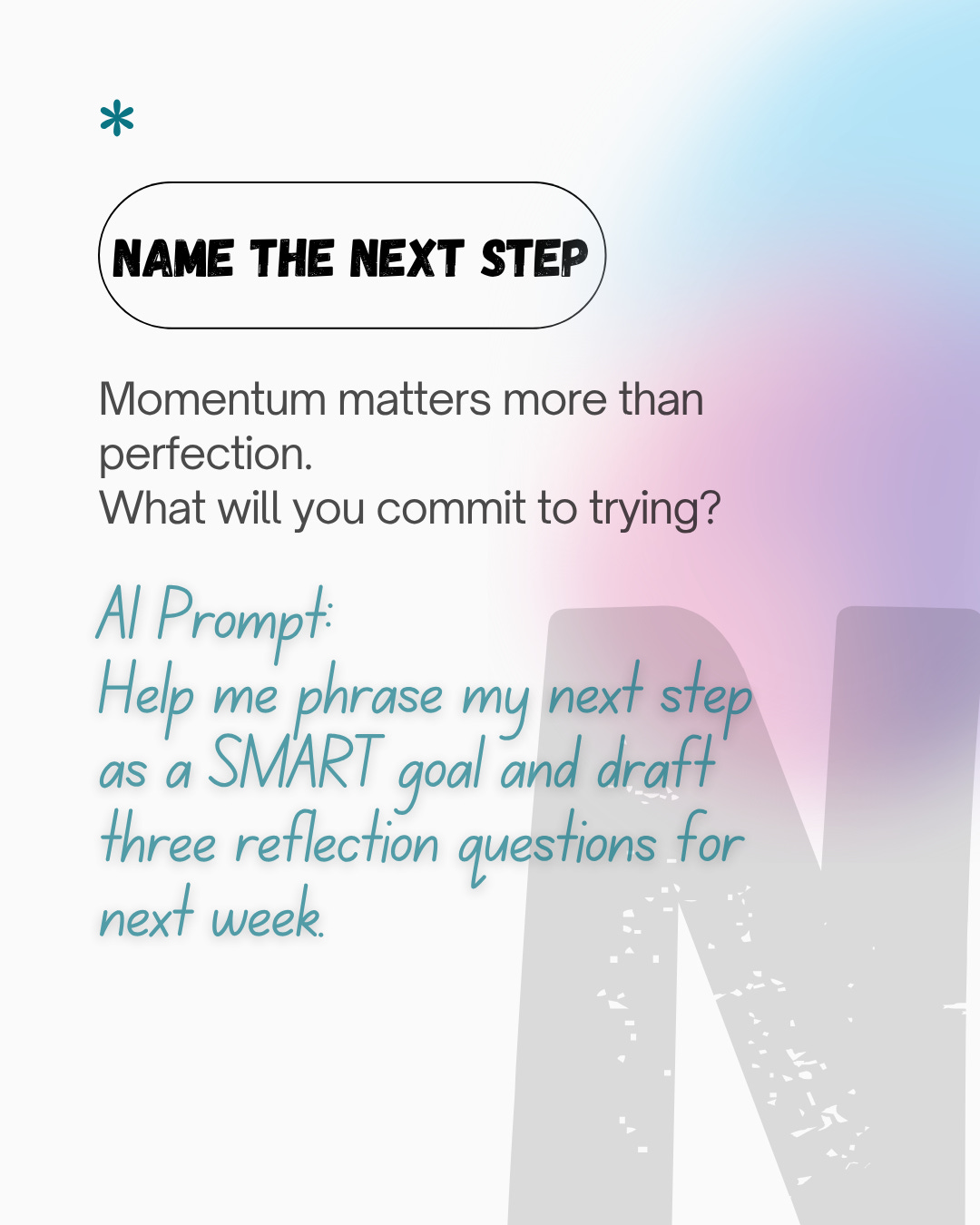
N — Name: Commit to your next step and reflect on what shifted.
That’s it.
Simple enough to do during lunch. Powerful enough to change how you see your work.
How AI Fits In
I didn’t create ALIGN for AI, but AI made it better.
It became my co-designer, my mirror, my journal partner.
Here’s how:
When I couldn’t articulate my values, I asked AI to help me find the words. (GPTs or gems trained to know my values help me immensely when I’m exhausted!)
When student feedback felt overwhelming, I asked it to summarize themes so I could see what mattered most.
When I needed ideas, I asked it to imagine what my belief could look like in action. (Sometimes we just need space to see the vision.)
And when I finally took a step forward, I asked it to help me phrase that next step clearly enough to share with my PLC. (And for myself, tbh.)
AI didn’t give me answers.
It gave me back perspective.
It reminded me that reflection doesn’t have to be one more thing. It can be the thing that makes everything else make sense.
The Shift
Once I started designing from my beliefs, everything started to feel lighter.
Not easier (teaching will never be easy), but lighter.
More coherent.
More like me again.
Students noticed, too.
My classroom started to sound different.
There was more laughter, more risk-taking, and more space for students to show up as themselves.
And it all started with one quiet thought:
You don’t need to do more.
You just need to align.
Try It
If you’re ready to come up for air, I built a free reflection handout based on the ALIGN framework. It’s something you can use during planning, in your PLC, or at 10pm when your brain won’t turn off.
It’s a five-step reset designed to help you slow down, listen to yourself, and design from what you believe.
Every aligned choice brings you closer to the teacher you meant to be.
And that teacher?
They’ve been there all along.

Also meant to say we also remember our good teachers. Not what they taught, but how they made us feel, and their relationship with us.
Discovering who we are may just be the most important thing we ever learn. What we study may be less about the topic than how we think and feel about it. We don’t retain information for long, but we do remember what it feels like to discover something new and exciting.